Get Ipamorelin
Counting droppings in an Ipamorelin experiment
Give me an actual bowel movement to count. Ipamorelin's rat experiments offer a concrete place to begin.
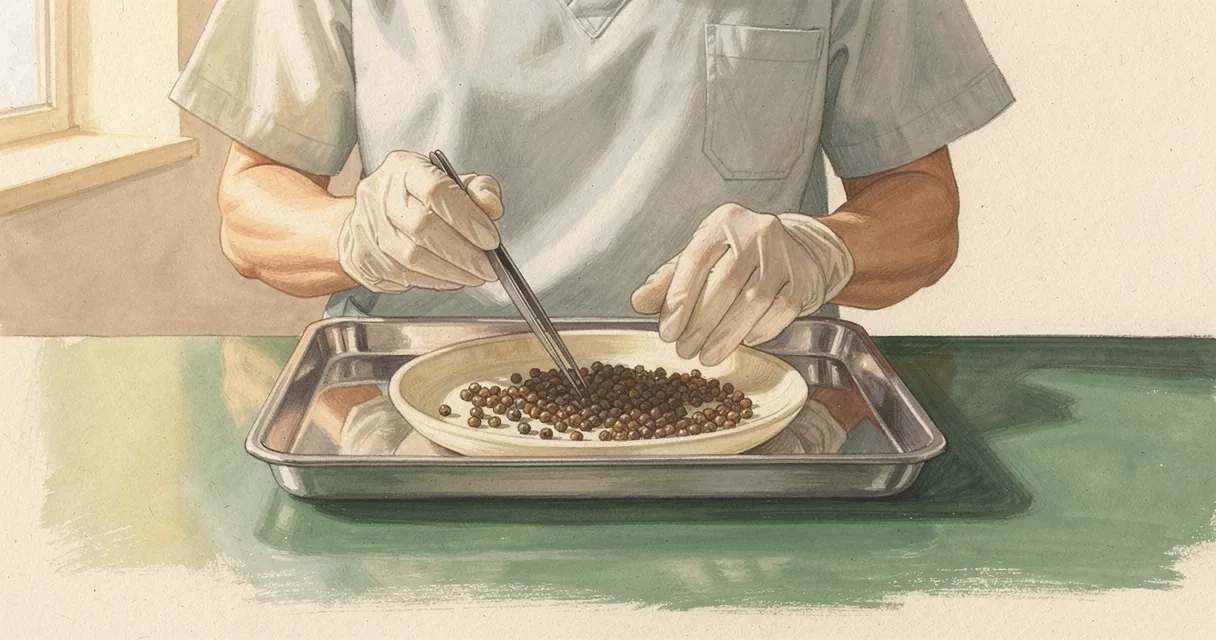
Bowel recovery after rat surgery
Rat droppings make a wonderfully practical place to begin with Ipamorelin. In a 2009 experiment on bowel recovery after surgery, researchers measured fecal output, food intake and body-weight gain in rats. Repeated intravenous Ipamorelin increased all three over 48 hours compared with the vehicle treatment. A single dose also shortened the wait for a first bowel movement.
There is an entire bodily job in that little collection tray. Surgery can leave the bowel temporarily stalled, a condition called postoperative ileus. Something eventually has to move through it again. The experiment followed that recovery with ordinary, tangible measurements.
The modest ambition appeals to me. Getting a bowel going would be a useful achievement in its own right. It also gives the word “Get” something more interesting to do than hover over an imaginary checkout: get a particular job done, then ask how convincingly it happened. The species matters here. These were rats recovering from experimentally induced ileus; the result belongs to that setting.
Gastric emptying in rats
A separate surgical rat study examined gastric emptying, the movement of food out of the stomach. Ipamorelin accelerated emptying toward the levels seen in non-operated controls. The researchers also investigated a ghrelin-receptor mechanism involving cholinergic nerves, which use acetylcholine to carry a signal.
That adds a location to the story. The first bowel movement and the stomach emptying are related events along a tract with several working parts. I was initially content with the loose phrase “gut motility.” I had overlooked the anatomy. After the gastric-emptying result, “gut motility” felt too loose. The bowel-research page follows both experiments and the clinical test that followed.
The published human trial
The trial in 114 adults undergoing bowel resection asked a more demanding question: would Ipamorelin help people tolerate a meal after surgery? The median time to the first tolerated meal was 25.3 h with Ipamorelin versus 32.6 h with placebo, with p=0.15. The primary endpoint was missed.
The earlier median in the Ipamorelin arm is tempting. It is also easy to repeat without the statistical result, turning an unsuccessful trial into a favourable-sounding anecdote. Both numbers and the missed endpoint have to travel together. My optimism about a clinical benefit shrank after that result.
The same short perioperative study reported treatment-emergent adverse events in 87.5% of the Ipamorelin arm and 94.8% of placebo. It found no Ipamorelin-specific safety signal in that window. Long-term exposure is a much larger question than this trial could settle.
Selective GH release
Ipamorelin is a synthetic peptide made of five amino acids. Its founding characterization in rat cells, rats and swine showed potent growth-hormone release while ACTH and cortisol stayed at the GHRH comparison levels, even at doses more than 200-fold above its GH ED50. That selective hormone response explains its reputation.
The receptor involved, GHS-R1a, is also called the ghrelin receptor. Ghrelin biology reaches into feeding and digestive movement as well as hormone release; a review of its prokinetic actions helps explain why a growth-hormone secretagogue ended up in bowel research. “Prokinetic” simply means promoting movement through the gut.
The human infusion study recorded a single GH pulse and a terminal half-life of approximately 2 hours. A blood measurement can show that the drug engaged the hormone system. I am more demanding about the next step: a benefit someone can feel or a bodily function restored. What Ipamorelin does at its receptor and the appetite question take those different threads further.
FDA and compounding
Ipamorelin has no FDA-approved indication. On FDA's page current as of April 22, 2026, the acetate's nomination under 503A for patient-specific pharmacies is recorded as withdrawn, with the safety concerns retained. It remains in Category 2 under 503B for outsourcing facilities. The FDA record leaves unresolved whether the withdrawn nomination changes what a patient-specific pharmacy can prepare. Ipamorelin is prohibited in sport at all times under WADA category S2.
That is the regulatory setting around these experiments. The effects and safety page considers the much more personal claims about sleep and recovery, alongside the cautions that deserve attention. For the routes and timing actually studied, there is the dosage record.