Does Ipamorelin make you hungry?
Wanting food, eating food and gaining fat are related events. The experiments measure different pieces of that story.
Ghrelin and feeding
Ipamorelin activates GHS-R1a, the receptor used by ghrelin. There is a sensible biological reason to ask about hunger. Central administration of ghrelin and GH secretagogues induced feeding in rats and activated brain appetite centres. That is class-level animal evidence for a feeding signal.
A blanket assurance that this receptor has no appetite consequences seems implausible to me. Nor can I credit a precise prediction of how hungry a person will feel. The human Ipamorelin studies in this record did not quantify everyday hunger. The healthy-volunteer experiment measured drug levels and GH; the bowel-surgery trial measured time to a tolerated meal. A tolerated meal after surgery is a different endpoint from appetite.
Fat gain in mice
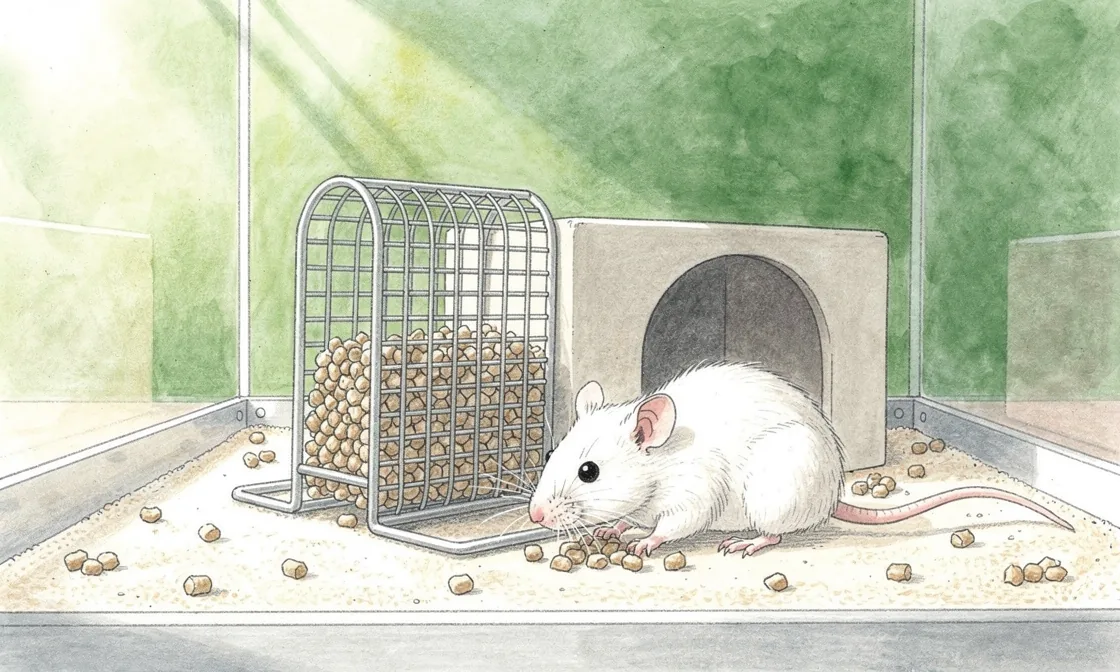
The mouse study of GH-independent adiposity complicates a simple fat-loss story. After two weeks of subcutaneous treatment, Ipamorelin increased fat-pad weights and serum leptin in both GH-deficient and GH-intact mice. Part of the effect on adiposity therefore extended beyond the GH pathway.
I put too much faith in the growth-hormone label at first. These mice make that shortcut uncomfortable. Fat deposition, food intake and a hormone pulse can all respond to a compound without lining up behind the outcome someone hopes for. Human belly-fat reduction has not been demonstrated for Ipamorelin in this record.
Community hunger accounts
Some people in research-use communities describe increased hunger; others emphasize sleep and recovery with little appetite change. Those accounts are anecdotal and supply no controlled clinical evidence. Reports often describe the hunger as milder than with GHRP-6, but that comparison has the same limitations as the reports themselves.
The reports disagree enough to spoil any tidy yes-or-no answer. There is no measured human effect size here, and an apparent absence of hunger says little about the other effects of engaging the receptor. No dose or schedule can be drawn from these stories.
Weight loss during chemotherapy in ferrets
The 2024 cisplatin experiment in ferrets tested a very different problem. Ipamorelin at 1-3 mg/kg intraperitoneally inhibited cisplatin-induced body-weight loss by approximately 24% on the last day of the delayed phase, 48-72 h. It had no anti-emetic effect in either the acute or delayed phase.
Protecting weight during that animal illness model is a specific result. The experiment did not measure a healthy person's subjective hunger or establish a treatment for people. It also recorded weight and vomiting separately, which is precisely why the result is interesting: those responses could diverge. Effects and safety returns to the metabolic questions raised by this wider ghrelin biology.